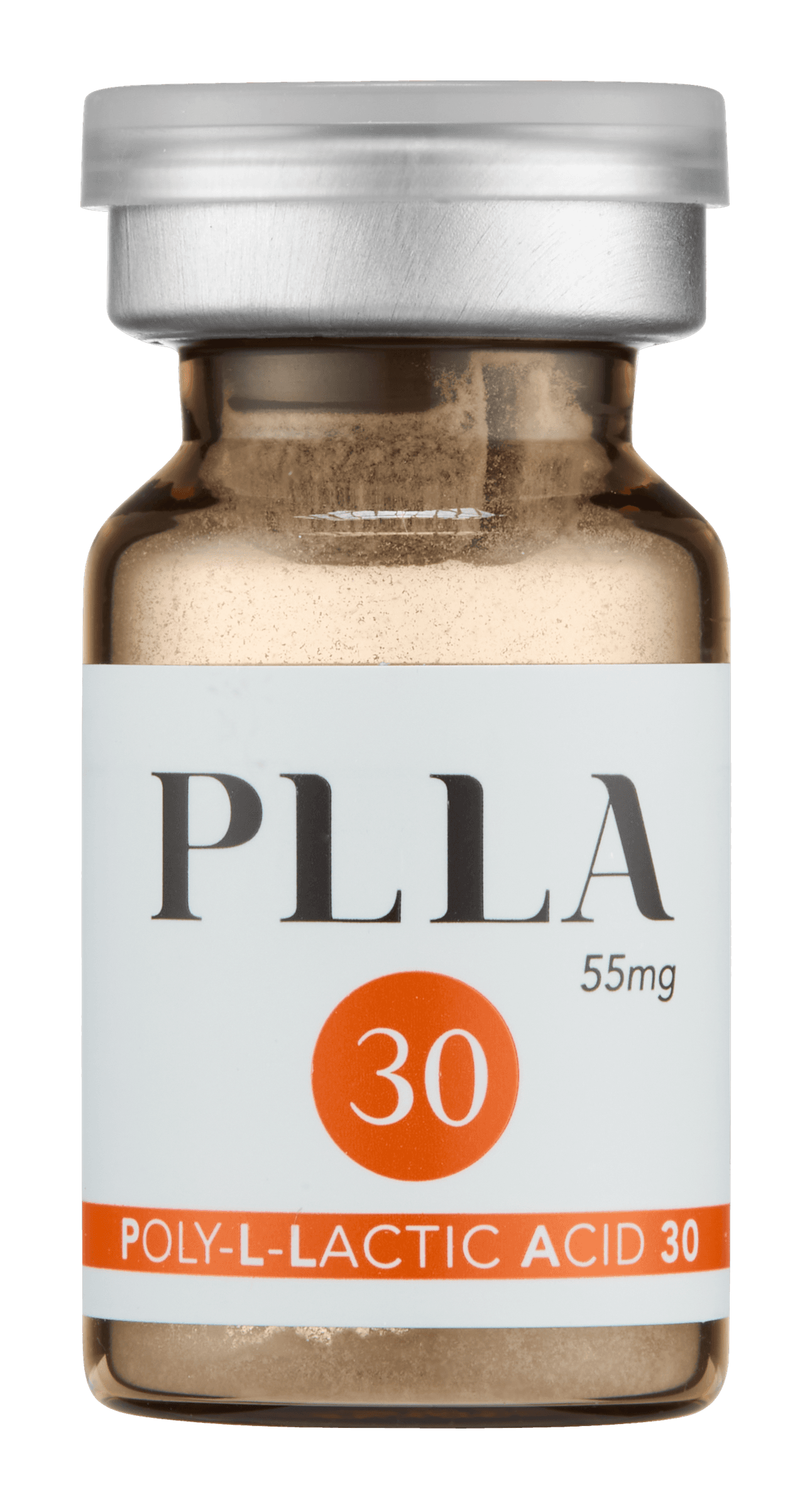
Photo Boosters · by Simfle Stick Co., Ltd
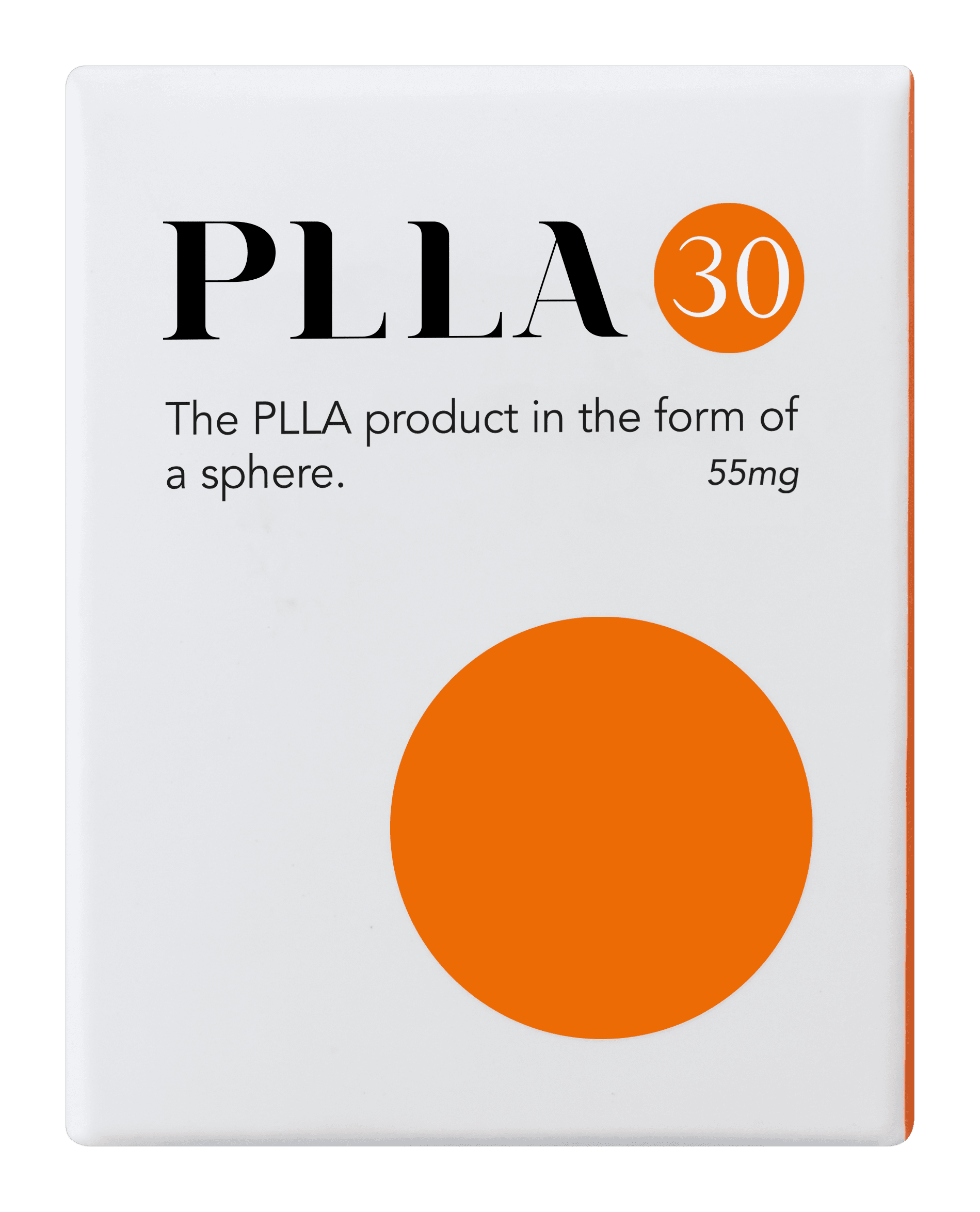
PLLA 30
Topical PLLA microspheres for fine wrinkles and atrophic scars
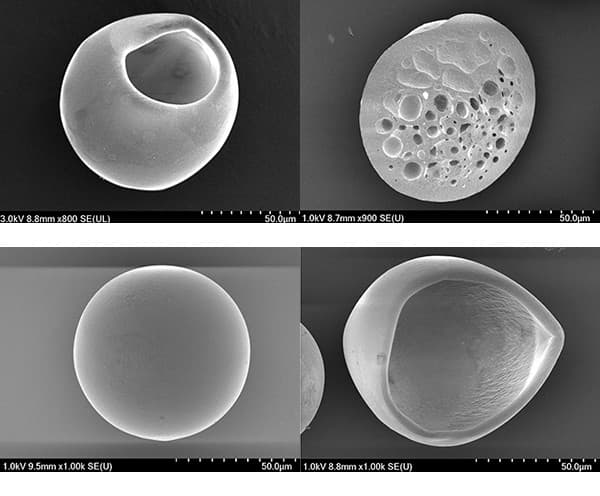
- Poly-L-lactic acid spheres, 20–50 µm (average 30 µm)
- Delivered through the channels of a fractional CO₂ laser, needle RF or microneedling
- Needle-free — nothing is injected
Request a quote
- Protocol training included
- Supplied by Regenesis
About
PLLA 30 is a dry-powder vial of smooth, spherical poly-L-lactic acid microspheres, reconstituted and applied to the skin immediately after a fractional laser, needle-RF or microneedling pass. The spheres are sized to pass through the channels the device creates and are worked in with ultrasound; in the dermis PLLA stimulates collagen production. It is the manufacturer's needle-free route to a collagen stimulator for fine wrinkles and atrophic scars.
Treatment possibilities
Indications from the manufacturer's documentation. Each links to the treatment page.
How to use
PLLA 30 in the treatment room, step by step.
- 01
Open the vial
Remove the cap and aluminium seal and clean the rubber stopper with an alcohol swab.
- 02
Reconstitute
Inject 2 cc sterile water and shake for about five minutes. Check after 30 minutes that the powder is fully hydrated; shake again if not.
- 03
Add hyaluronic acid
Add 2 cc non-cross-linked hyaluronic acid and shake for one to two minutes. The HA keeps the spheres dispersed.
- 04
Create the channels
Fractional CO₂, fractional needle RF or microneedling on the treatment area. Manufacturer's reference for its CO₂ test device: 10–12.5 mJ, 5–10 % density, one pass.
- 05
Apply and work in
Draw the suspension into a syringe, spread it over the treated skin and work it in with 20–40 kHz ultrasound — about ten minutes for a full face, five for a small area. Never inject.
- 06
Aftercare
SPF 30+; no retinoids, acids or benzoyl peroxide until the skin has healed; limit sweating for a few days.
- 07
Course
Three sessions four weeks apart (manufacturer protocol). Reconstituted product keeps refrigerated at 2–8 °C for 72 hours; never freeze.
PLLA 30 how to use: reconstitution and application after a fractional pass · Simfle Stick
Detailed information
Technology, indications and specifications as documented by Simfle Stick Co., Ltd.
- Sized for the channel
- A fractional CO₂ channel is typically 200–250 µm wide; the spheres average 30 µm, so they pass through. Smooth, spherical particles are less likely to provoke a foreign-body response than irregular ones, according to the manufacturer.
- PLLA
- Poly-L-lactic acid is a biodegradable, biocompatible polyester derived from plant starches, used for decades as a collagen stimulator. In the skin it breaks down to lactic acid, carbon dioxide and water. PLLA 30 uses a high-molecular-weight L-type polymer (about 311,000 Da, manufacturer) for a slower breakdown.
- Devices
- Fractional CO₂ and erbium lasers, fractional needle RF and microneedling all create suitable channels. Settings are device-specific; the manufacturer's tables cover its own test devices only.
- Not an injectable
- The product is applied topically after the pass and worked in with ultrasound. The manufacturer states it must not be injected.
- Material
- Poly-L-lactic acid microspheres, smooth spherical, 20–50 µm (average 30 µm) · Mw about 311,000 Da (manufacturer)
- Form
- Dry powder vial, 23 mg PLLA (manufacturer); reconstitute with 2 cc sterile water + 2 cc non-cross-linked HA
- Delivered through
- Fractional CO₂ · fractional needle RF · microneedling
- Worked in with
- Ultrasound 20–40 kHz, 5–10 minutes
- Reference setting (manufacturer CO₂ test device)
- 10–12.5 mJ · 5–10 % density · 1 pass
- Course
- 3 sessions, 4 weeks apart
- Reconstituted storage
- 2–8 °C, use within 72 hours, never freeze
- Manufacturer
- Simfle Stick Co., Ltd, Daegu, South Korea
Cautions
- Do not inject
- Contraindications of the fractional/needling procedure apply: active skin infection, recent sunburn, anticoagulants, active psoriasis/eczema in the area, pregnancy, connective-tissue disease, recent peel, suspected skin cancer in the area
- Not immediately after another laser treatment
- Inadequate sun protection afterwards raises the risk of post-inflammatory hyperpigmentation
Publications
Published evidence on PLLA 30 itself is a single-patient case report. Larger studies in the literature concern other PLLA products.
- Treatment of an atrophic scar with fractional carbon dioxide laser-assisted poly-L-lactic acid delivery — Medical Lasers, 2021
Talk to us